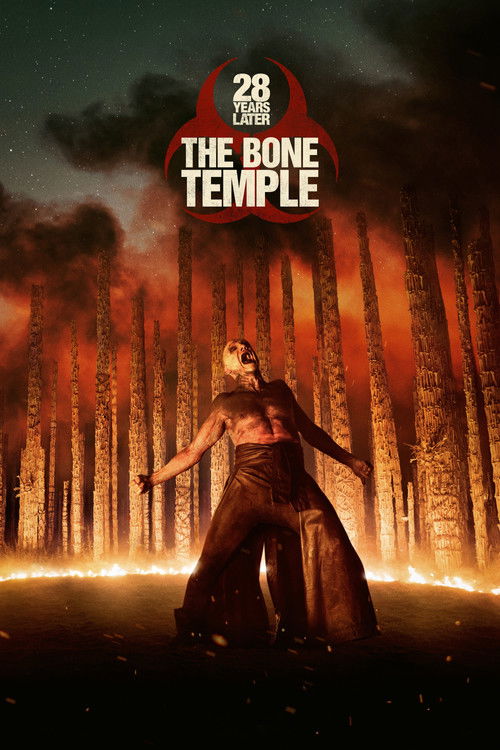
28 Years Later: The Bone Temple
Dr. Kelson finds himself in a shocking new relationship – with consequences that could change the world as they know it – and Spike’s encounter with Jimmy Crystal becomes a nightmare he can’t escape.











Where to watch


Drama Serie Review
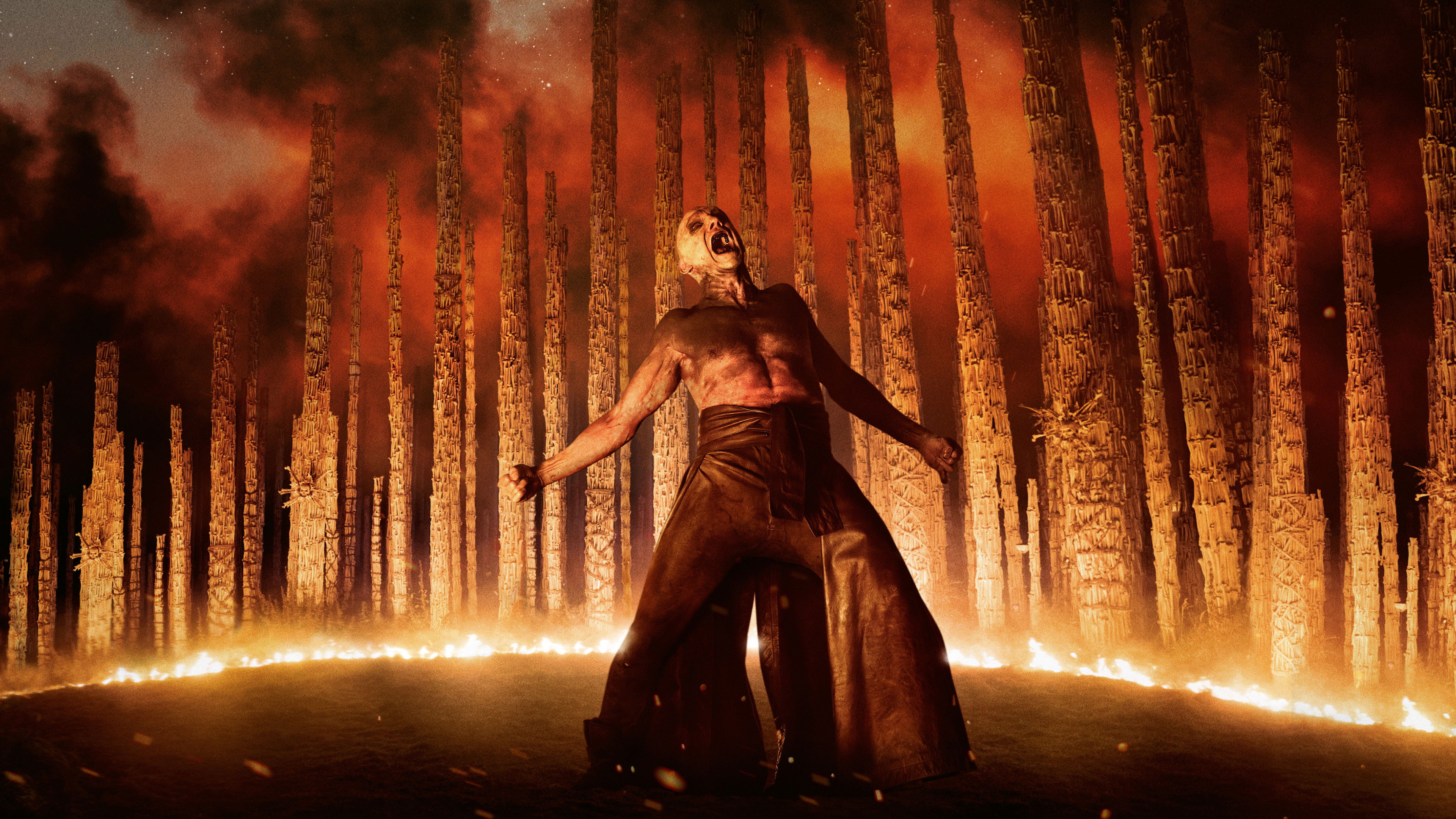
Twenty-eight years is an eternity in the lifecycle of a virus, and Nia DaCosta’s *The Bone Temple* understands that the true horror of the Rage pandemic has shifted from the kinetic terror of the sprint to the stagnant rot of a broken world. This third installment ditches the urban decay of London for a sprawling, atmospheric desolation that feels both ancient and futuristic. DaCosta brings a distinct visual elegance to the franchise, trading Danny Boyle’s grainy digital chaos for a haunting, wide-angle stillness that makes the English countryside feel like an alien planet.
The film’s strength lies in its refusal to repeat the "survivors on the road" trope. Instead, it leans into a grotesque sociopolitical thriller. Ralph Fiennes delivers a masterclass as Dr. Kelson; his performance is chillingly understated, portraying a man whose intellectual curiosity has curdled into something monstrous. The central conflict—Kelson’s "shocking new relationship"—serves as a daring, if polarizing, metaphor for how humanity attempts to domesticate its own destruction. Jack O’Connell’s Spike provides the necessary emotional anchor, particularly in his harrowing sub-plot involving Jimmy Crystal. These sequences are claustrophobic and visceral, reminding us that even decades after the collapse, the greatest threat remains the cruelty of the uninfected.
However, the film occasionally stumbles under the weight of its own ambition. The 109-minute runtime feels slightly cramped, especially when trying to balance the intimate psychological horror of Kelson’s experiments with the broader survivalist stakes. Erin Kellyman and Alfie Williams are excellent, but their character arcs feel truncated, serving more as thematic cogs than fully realized people. Furthermore, the "Bone Temple" itself, while a striking piece of production design, borders on the fantastical, occasionally straining the grounded sci-fi realism that defined the original 2002 film.
Ultimately, *28 Years Later: The Bone Temple* is a cerebral, beautifully shot evolution of the series. It favors dread over jump scares and philosophy over gore. While it lacks the raw, DIY energy of the original, it compensates with a sophisticated exploration of legacy and biological hubris. It is a grim, necessary update for a franchise that still has plenty of bite.