12 Angry Men
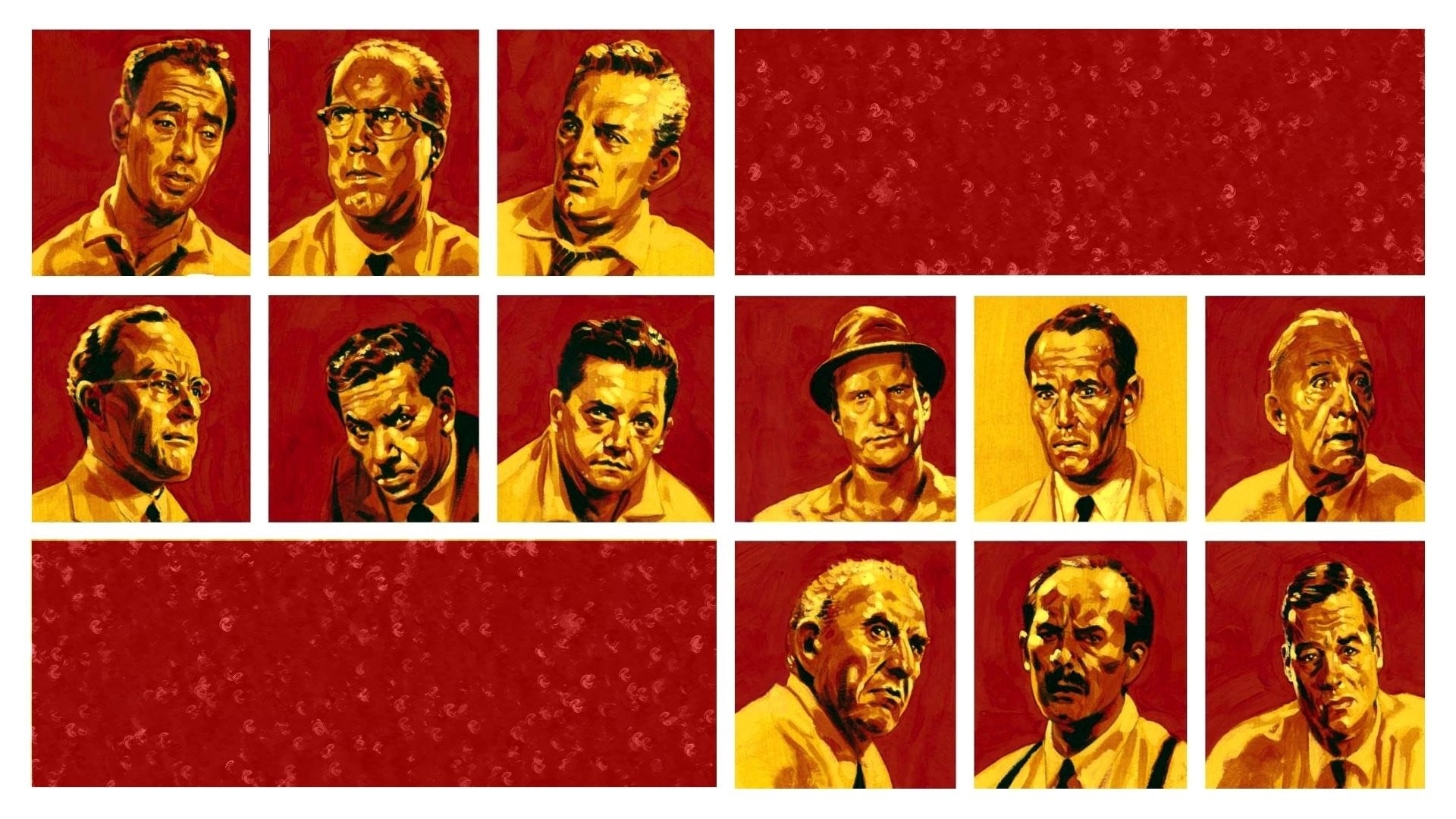
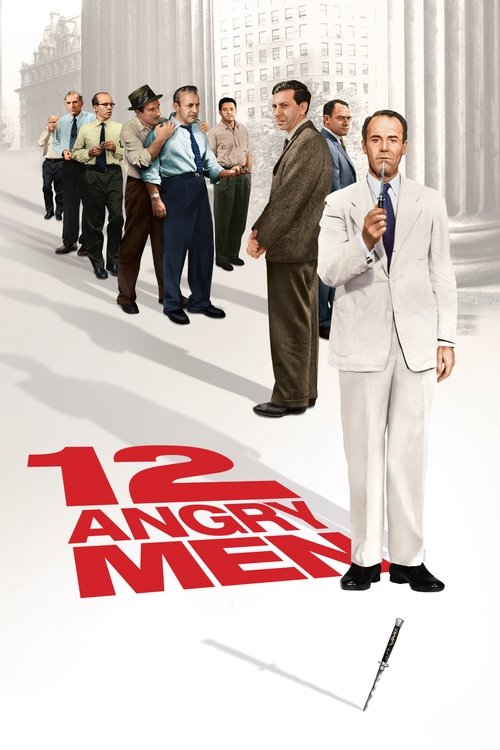
The defense and the prosecution have rested and the jury is filing into the jury room to decide if a young Spanish-American is guilty or innocent of murdering his father. What begins as an open and shut case soon becomes a mini-drama of each of the jurors’ prejudices and preconceptions about the trial, the accused, and each other.


Where to watch


Drama Serie Review
Sidney Lumet’s *12 Angry Men* is a masterclass in spatial economy, proving that a single room and twelve chairs are all a filmmaker needs to dismantle the complexities of the American soul. While many legal dramas thrive on courtroom theatrics and surprise witnesses, Lumet strips away the artifice, trapping the audience inside a sweltering jury room where the heat is as oppressive as the stakes. It is a cinematic pressure cooker that transforms a seemingly "open and shut" murder case into a profound autopsy of human prejudice.
The film’s greatest strength lies in its structural progression. As Henry Fonda’s Juror 8 stands alone against a tide of "guilty" votes, the narrative shifts from a debate about facts to a confrontation of character. Lumet’s direction is surgical; he uses increasingly tight close-ups and low angles to make the walls feel like they are closing in on the jurors. The performances are uniformly excellent, particularly Lee J. Cobb, whose explosive volatility serves as the perfect foil to Fonda’s quiet, unwavering logic. The film brilliantly illustrates how personal baggage—whether it is Juror 10’s blatant bigotry or Juror 3’s unresolved parental trauma—distorts the lens of justice.
However, from a modern critical perspective, the film is not without its limitations. The dialogue, while sharp, occasionally veers into the didactic. There are moments where the "lessons" on civic duty feel slightly choreographed, bordering on a stage-play artifice that lacks the messy, overlapping spontaneity of real-world deliberation. Additionally, the rapid-fire succession of jurors changing their minds can sometimes feel more like a narrative necessity than a psychological reality, rushing some of the more complex character arcs to fit the 97-minute runtime.
Despite these minor gripes, *12 Angry Men* remains a towering achievement in minimalist storytelling. It serves as a vital reminder that the pursuit of truth is often a lonely, exhausting endeavor. For any viewer interested in the intersection of morality and law, this is essential viewing—a timeless study of how one voice can pierce through the roar of a prejudiced majority.